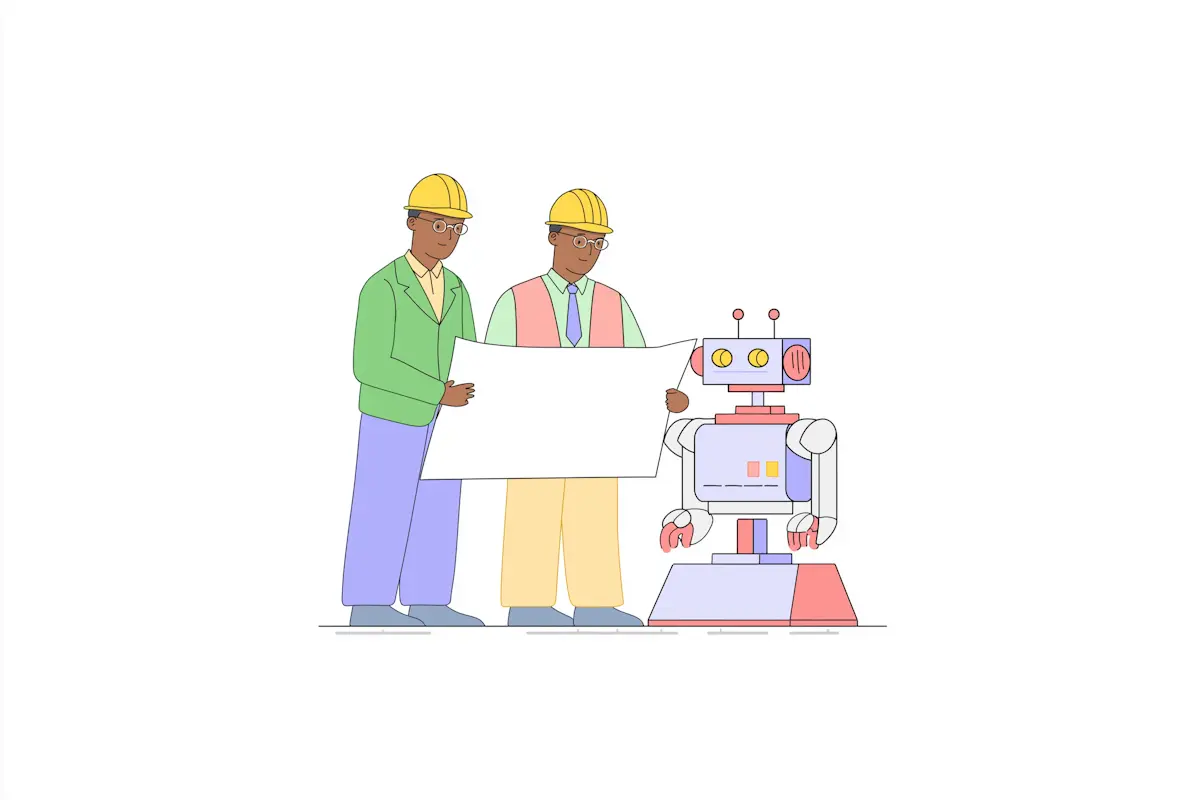
Human oversight in AI customer service is becoming a crucial strategy for businesses aiming to combine the efficiency of automation with the nuance of human judgment. As AI tools handle an increasing number of customer interactions, understanding when and how human intervention fits in can prevent errors and improve overall service quality. Rather than replacing human agents, AI in customer support works best when paired with real-time human review and decision-making. This balance helps ensure accuracy and builds customer trust by addressing complex or sensitive issues more thoughtfully. This article explores practical frameworks and best practices for integrating human oversight so teams can scale responsibly while managing risk.
Understanding Human Oversight in AI Customer Service
Human oversight refers to the active involvement of human agents in monitoring, guiding, and intervening in automated decision-making processes. It keeps AI systems accountable, ethical, and aligned with organizational values and customer expectations. In customer support, oversight matters because issues vary widely in complexity, and sensitive interactions still require empathy, discretion, and judgment that AI alone may not fully provide.
Human oversight typically answers three questions:
- When can AI respond autonomously without increasing risk?
- What signals should trigger a human review or takeover?
- How do teams learn from overrides to improve future performance?
Defining Human Oversight and Its Role
Oversight acts as a safeguard that detects errors, bias, or misunderstandings that AI might introduce. It also provides a clear pathway for accountability when AI outputs affect customer outcomes. The goal is not to slow down service, but to introduce the right “checkpoints” so automation stays reliable as volume grows.
The Concept of Human in the Loop in Customer Support
The “Human in the Loop” (HITL) approach integrates human judgment inside the AI-driven workflow. Instead of AI operating end-to-end, human agents review, validate, or override AI-generated responses or decisions. HITL can be lightweight (spot checks) or strict (pre-send approvals), depending on risk and regulatory requirements. It improves reliability, reduces errors, and supports continuous learning when human feedback is captured and used to refine models and rules.
AI Oversight Support: How AI and Humans Collaborate
AI oversight support describes a collaborative setup where AI handles routine inquiries, suggests solutions, and flags potential problems, while humans verify outputs and step in for complex or sensitive cases. This synergy boosts productivity and accuracy while preserving the human touch customers value. It depends on clear escalation paths, transparency into how AI reached a recommendation, and workflows that make human intervention seamless rather than disruptive.
Frameworks for Implementing Human Oversight in AI-Powered Support
Oversight frameworks help teams define the “rules of engagement” between automation and humans. The right model depends on your risk tolerance, customer expectations, and operational goals.
Models of Human-AI Collaboration in Customer Service
Human-AI collaboration typically falls into a few models, each with a different level of human control and operational speed.
- Human-in-the-loop: AI handles routine work and escalates ambiguous or high-risk cases for human review before the customer sees an outcome.
- Human-on-the-loop: AI operates autonomously, while humans monitor in real time and intervene when anomalies or policy violations appear.
- Human-in-command: AI primarily assists humans with drafts, recommendations, and insights, but humans remain the decision-makers.
Choosing a model becomes easier when you classify interactions by risk (e.g., billing disputes, cancellations, safety issues, personal data, legal claims) and decide where humans must be involved.
Key Components of Effective Oversight Frameworks
Effective oversight requires more than “having humans available.” It needs clear definitions, guardrails, and learning loops that improve quality over time.
- Decision transparency: clarity on what the AI decided, why it decided it, and what sources it used.
- Escalation protocols: consistent triggers and fast handoffs that prevent customers from repeating themselves.
- Agent enablement: training on AI strengths, limitations, and how to critique outputs.
- Feedback loops: captured overrides and outcomes that inform model and rule improvements.
- Compliance and ethics: privacy controls, bias monitoring, and auditable governance policies.
Tools and Technologies Enabling Human Oversight
Technology makes oversight scalable by highlighting risk, explaining outputs, and routing work efficiently. Common enablers include interaction dashboards that surface decision rationales and history, explainable AI (XAI) layers that provide visibility into recommendations, workflow automation for escalation and routing, real-time monitoring for anomalies, and collaboration tooling that connects agents with AI trainers and developers.
Benefits of Maintaining Human Oversight in AI Decision-Making
Human oversight improves quality without giving up the speed benefits of automation. It also reduces reputational and operational risk when AI systems face edge cases.
Enhancing Accuracy and Reducing Errors
Humans provide a quality-control layer that catches mistakes before they reach customers. AI can process large volumes quickly, but it may miss nuance, misread intent, or make confident-sounding errors. Human review helps prevent misinformation, inappropriate tone, and incorrect recommendations, and it creates a steady stream of real-world feedback to improve performance over time.
Building Customer Trust and Satisfaction
Customers often feel more confident when they know a real person can step in. Human agents handle sensitive interactions with empathy and discretion, especially when a customer is frustrated, confused, or dealing with a high-stakes issue. The result is a support experience that feels both fast and thoughtful, strengthening loyalty and brand perception.
Adapting to Complex or Unpredictable Scenarios
Support teams face edge cases, unclear requests, and situations where policy requires discretion. Humans bring contextual awareness, ethical judgment, and creativity, allowing them to resolve exceptions, escalate appropriately, and apply nuance where rigid automation can fail. This keeps the overall system resilient as customer needs and regulations evolve.
Challenges and Risks in Human Oversight of AI Decisions
Oversight is not “free.” It must be designed so humans add value where it matters most, without turning oversight into a bottleneck or exhausting the team.
Balancing Automation Efficiency with Human Judgment
The core challenge is finding the right balance between speed and scrutiny. Over-automation can miss nuance and context, while over-review can slow down operations and negate automation gains. Strong workflows define where AI can act safely, where humans must intervene, and how escalation criteria are refined over time.
Avoiding Oversight Fatigue and Cognitive Overload
Continuous monitoring can lead to fatigue when agents must constantly decide whether to trust AI. To reduce cognitive load, teams should prioritize interface design that surfaces high-risk cases, automate routine verification when possible, rotate oversight responsibilities, and ensure training includes practical guidance on when intervention is truly needed.
Managing Liability and Ethical Concerns
Accountability becomes complex when AI influences outcomes. Clear policies are needed to define responsibility, escalation expectations, and auditability. Ethical risks include bias, lack of transparency, and mishandling of personal data. Oversight must include privacy controls, bias detection and correction, and clear communication about AI’s role so customers understand what’s happening and why.
Best Practices for Effective Human Oversight in Customer Service AI
Best practices focus on making oversight consistent, repeatable, and measurable, while keeping the customer experience smooth.
Training and Empowering Support Staff
Oversight starts with agents who understand AI capabilities and limitations. Training should cover how to interpret recommendations, recognize failure modes, and intervene confidently. Empowerment means agents have the authority to override AI-driven decisions when they spot inaccuracies, policy conflicts, or customer-specific nuance.
Designing Clear Escalation and Intervention Protocols
Protocols define when humans step in and how handoffs happen. Teams should set thresholds (confidence, topic risk, sentiment, policy triggers) and define roles to avoid delays. Protocols should remain flexible enough to handle diverse cases while creating consistent guardrails for quality and compliance.
Monitoring, Feedback, and Continuous Improvement
Ongoing monitoring and feedback loops refine both the AI system and the oversight approach. Tracking AI accuracy, overrides, resolution outcomes, and customer satisfaction helps identify gaps. Regular reviews that include frontline agents and AI stakeholders ensure changes reflect real-world needs and reduce recurring issues.
Practical Steps to Integrate Human Oversight into AI Customer Support
A practical rollout treats oversight as a system design problem: define risk, test workflows, measure impact, then scale with the right tooling and team routines.
Assessing Current AI Capabilities and Oversight Needs
Start by evaluating where AI performs well and where it struggles. Review ticket types, error patterns, and the decisions AI is allowed to make today. Map interaction categories by risk and identify which ones require human judgment for nuance, empathy, or regulatory compliance. This assessment helps teams focus oversight on the most critical decision points.
Piloting and Measuring Oversight Impact
Pilot human oversight on a representative slice of interactions before scaling. Track resolution accuracy, customer satisfaction, response time, and override frequency. Combine quantitative metrics with qualitative feedback from agents and customers to identify friction points, bottlenecks, and training needs, then refine thresholds and protocols based on what you learn.
Scaling Oversight Practices Across Teams
Scaling requires standard guidelines, role clarity, and tools that make handoffs effortless. Build training materials from pilot learnings, deploy monitoring and routing systems, and maintain a culture of iteration so oversight adapts as AI capabilities evolve. Done well, scaling improves consistency without creating review fatigue.
Reflecting on the Role of Human Oversight for Future-Ready Customer Support
As AI advances, oversight remains central to delivering support that is both fast and trustworthy. The most effective teams will continuously recalibrate the balance between automation and human judgment as customer expectations and regulatory environments change.
Anticipating Evolving Customer Expectations and AI Capabilities
Customers increasingly expect fast, personalized service, but they also want empathy and context when issues become sensitive. AI can handle many routine tasks efficiently, while humans remain essential for complex judgment and emotional nuance. Maintaining that balance keeps experiences seamless without feeling robotic or risky.
Ensuring Ethical and Responsible Use of AI in Support
Human oversight safeguards fairness, transparency, and data protection. As AI becomes more capable, teams should strengthen governance: monitor bias, enforce privacy rules, and maintain audit trails. Responsible oversight protects customers and reinforces brand trust through accountable innovation.
Fostering Continuous Collaboration Between Humans and AI Systems
Human oversight works best as a partnership, not a policing function. Agents provide real-world feedback, AI systems surface insights and reduce workload, and both evolve together through an ongoing improvement cycle. Investing in that collaboration helps organizations stay agile while delivering consistently high-quality support.
How Cobbai Enhances Human Oversight in AI-Driven Customer Service
These oversight principles become easier to operationalize when the tooling supports clear control, fast intervention, and continuous learning. Cobbai is designed to balance automation with human judgment by combining autonomous AI agents with workflows that keep teams in control.
The Companion agent assists human agents by drafting replies and suggesting next best actions while leaving final decisions to people. This reduces the risk of confident-but-wrong answers and helps agents intervene quickly when context, policy, or empathy matters. The Analyst agent continuously tags and routes tickets based on intent and urgency under governance rules defined by the team, helping ensure AI-driven actions align with internal policies and escalation standards.
Cobbai also centralizes knowledge through its Knowledge Hub so both AI and humans rely on the same up-to-date sources. Monitoring and testing capabilities help teams review AI outputs, spotlight high-risk cases, and reduce oversight fatigue by focusing attention where intervention is most valuable. With governance controls for tone, data sources, and escalation protocols, Cobbai supports a human-in-the-loop approach that scales responsibly while preserving the personal touch customers expect.

.svg)