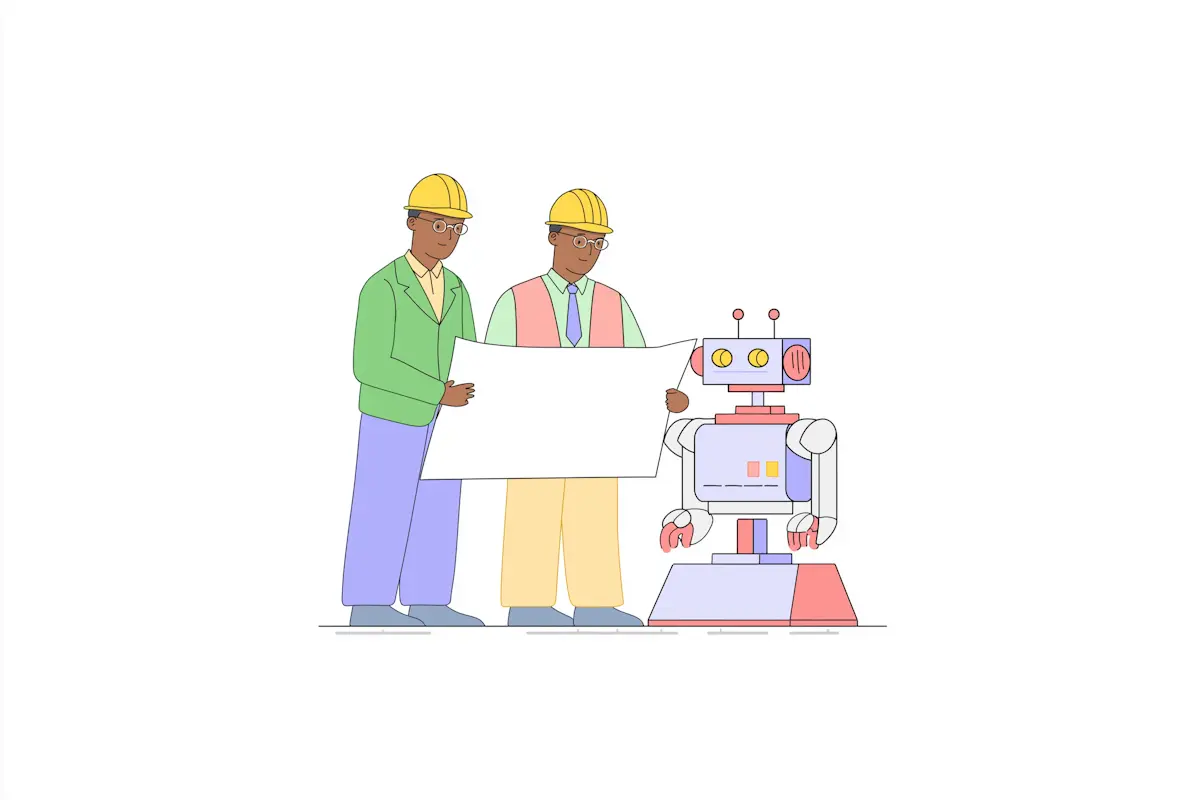
AI support collaboration patterns are reshaping how customer service teams work with intelligent systems to deliver faster, more accurate assistance. Rather than replacing agents, AI increasingly acts as a partner that supports decision-making, reviews responses, and helps enforce quality standards. Understanding how these collaboration models work is essential for teams adopting AI into their workflows.
Three patterns appear most frequently in modern support environments: Co-Pilot, Reviewer, and Approver. Each defines a different balance between automation and human oversight. Some focus on real-time assistance, others emphasize quality control or governance.
This guide explains how these patterns function, compares their strengths and trade-offs, and provides practical advice for implementing them in real support operations. By choosing the right collaboration model—or combining several—organizations can improve response speed, maintain quality, and scale support more effectively.
Understanding AI-Human Collaboration in Customer Support
The role of AI in enhancing support workflows
AI technologies are increasingly embedded into customer support workflows. Their main value lies in automating repetitive tasks, surfacing relevant knowledge, and helping agents resolve issues faster.
For example, AI can handle routine inquiries, retrieve knowledge base articles, summarize conversations, and generate response drafts. These capabilities reduce the cognitive load on agents and allow them to focus on complex or emotionally sensitive interactions where human judgment matters most.
Modern AI systems also analyze large volumes of customer data to identify patterns in tickets, detect recurring issues, and recommend next-best actions. As a result, support operations become both faster and more consistent while maintaining quality.
Overview of human-AI interaction models
Human-AI collaboration does not follow a single structure. Instead, organizations adopt different interaction models depending on their operational needs and risk tolerance.
In some cases AI assists agents in real time. In others it evaluates responses after they are written or authorizes actions before they reach customers. These patterns define how responsibility is shared between human agents and AI systems.
- Co-Pilot: AI assists agents during live interactions.
- Reviewer: AI analyzes responses and suggests improvements.
- Approver: AI validates or authorizes actions before delivery.
Understanding these patterns helps teams structure workflows that combine speed, accuracy, and accountability.
Why collaboration patterns matter for support teams
Without clearly defined collaboration patterns, AI integration often creates confusion. Agents may not know when to rely on AI, when to override it, or who is responsible for final decisions.
Well-structured collaboration models solve this by clarifying roles and responsibilities. They define:
- When AI provides assistance
- When humans validate or override outputs
- Where accountability ultimately sits
This structure reduces friction inside support teams and ensures that AI improves operations rather than complicating them.
Defining the Three Key AI Collaboration Patterns
Co-Pilot Mode: Real-time assistance for support agents
In Co-Pilot mode, AI works alongside agents during live interactions. It provides suggestions, drafts responses, retrieves relevant information, and recommends next steps while the conversation is happening.
The agent remains the primary communicator with the customer. AI simply acts as a supportive assistant that accelerates work and reduces effort.
Typical co-pilot capabilities include:
- Generating draft responses
- Surfacing knowledge base articles
- Suggesting troubleshooting steps
- Summarizing conversations
This pattern is particularly effective in high-volume environments where speed and consistency are essential.
Reviewer Mode: AI as a quality control partner
Reviewer mode introduces AI after a response has been drafted. Instead of assisting during the interaction, the system evaluates messages and suggests improvements.
The AI may flag compliance risks, detect tone issues, recommend edits, or highlight missing information. Agents can then revise their responses before sending them to the customer.
This pattern works especially well for organizations that prioritize quality control, brand consistency, or regulatory compliance. By reviewing interactions systematically, AI helps maintain standards across large support teams.
Approver Mode: AI authorization and validation
Approver mode gives AI a more authoritative role. Here the system evaluates actions or responses and determines whether they meet predefined criteria before they proceed.
This might include approving refunds, validating compliance requirements, or confirming policy adherence before communication is sent to customers.
Although AI performs the initial validation, human supervisors typically retain final oversight. This layered approach combines automation efficiency with governance safeguards.
Comparing Co-Pilot, Reviewer, and Approver Modes
Roles and responsibilities in each mode
The three collaboration patterns differ mainly in when AI enters the workflow and how much authority it holds.
- Co-Pilot: AI assists during live interactions and supports agents in real time.
- Reviewer: AI analyzes responses after drafting to improve quality.
- Approver: AI validates decisions or responses before they reach customers.
Each pattern therefore addresses a different operational objective: speed, quality control, or compliance.
Benefits and trade-offs of each pattern
Every collaboration model provides advantages but also introduces constraints.
Co-Pilot mode maximizes efficiency and allows agents to respond quickly with the support of AI-generated insights. However, agents must remain attentive and verify suggestions.
Reviewer mode improves consistency and reduces errors, but it may slightly extend response time due to additional review steps.
Approver mode offers the strongest safeguards and is valuable in regulated industries. Yet it can introduce bottlenecks if applied too broadly.
Organizations often combine these patterns rather than choosing only one.
Typical use cases across support environments
Different environments naturally favor different collaboration patterns.
- Live chat support: Co-Pilot assistance improves response speed.
- Email support: Reviewer mode helps refine longer responses.
- Regulated industries: Approver workflows enforce compliance.
Hybrid workflows are also common. For example, AI may assist during drafting, review the message automatically, and require approval only for high-risk situations.
Impact on support workflows and outcomes
When implemented correctly, these collaboration patterns transform support operations. Agents gain faster access to knowledge, responses become more consistent, and compliance risks decrease.
Instead of replacing human agents, AI amplifies their capabilities. The result is a support organization that can scale volume while preserving quality and customer satisfaction.
Implementing Effective Human-AI Workflow Patterns
Selecting the right collaboration model
Choosing the right pattern begins with understanding operational priorities. Some teams focus on speed, others on quality control or risk management.
Support leaders should evaluate factors such as ticket volume, case complexity, compliance requirements, and agent experience. In many cases the best approach is to deploy several patterns simultaneously across different workflows.
Integrating AI with existing support tools
Successful adoption also depends on seamless integration with existing tools. AI features should appear directly inside the systems agents already use, such as helpdesk platforms, CRMs, or messaging interfaces.
Common integration strategies include:
- Embedding AI suggestions within the ticket interface
- Connecting knowledge bases for contextual retrieval
- Using APIs to synchronize customer data
When integration feels natural, agents adopt AI tools much faster.
Monitoring and optimizing collaboration
Human-AI collaboration should be continuously monitored. Teams need visibility into how often AI suggestions are accepted, how response quality evolves, and where workflows slow down.
Useful metrics include:
- Response time
- Resolution rate
- AI suggestion acceptance rate
- Customer satisfaction
Analyzing these metrics allows organizations to refine collaboration patterns over time.
Training and change management
Adopting AI also requires cultural change inside support teams. Agents must understand how AI works, when to rely on it, and when human judgment should override automated recommendations.
Training programs should therefore focus not only on tool usage but also on workflow principles. When agents feel confident using AI systems, adoption increases and collaboration becomes far more effective.
Practical Ways to Maximize AI Support Collaboration
Balancing automation and human judgment
Automation works best when it handles repetitive tasks while humans focus on nuanced decisions. Support leaders should therefore define clear boundaries between automated actions and human oversight.
This balance ensures efficiency without sacrificing empathy or contextual understanding.
Improving productivity and customer satisfaction
Well-implemented AI collaboration directly improves both agent productivity and customer experience. Agents resolve issues faster, customers receive more consistent answers, and organizations can scale support operations without proportionally increasing headcount.
AI-driven insights such as sentiment analysis or conversation summaries further help agents tailor responses to individual customer needs.
Designing adaptable workflows for the future
Customer support environments evolve rapidly as new channels and technologies emerge. AI workflows must therefore remain flexible.
Organizations should regularly reassess their collaboration patterns, experiment with new configurations, and update training data as customer expectations change.
Teams that maintain adaptable workflows will benefit most as AI capabilities continue to advance.
How Cobbai Supports Effective AI-Human Collaboration
Cobbai is designed to support multiple AI collaboration patterns within customer service workflows. Its platform allows teams to deploy AI assistance where it provides the most operational value while maintaining human oversight.
The Companion AI agent functions as a real-time co-pilot for support agents. It surfaces knowledge, drafts responses, and suggests next steps during conversations, helping agents respond more quickly while retaining control over the final message.
For reviewer and approval workflows, Cobbai provides governance controls that allow supervisors to review AI-generated content, validate responses, and ensure communications align with company policies.
The platform also includes analytics capabilities through the Analyst agent and Topics module. These tools analyze customer interactions, detect recurring issues, and surface insights that help teams continuously refine their collaboration models.
By combining intelligent assistance, governance controls, and operational insights, Cobbai enables support teams to implement AI collaboration patterns that match their workflows while improving both efficiency and service quality.

.svg)